

Industries and Solutions
Copper
Improve copper recovery, fragmentation, and operational confidence with tailored blasting and digital solutions built for the demands of open pit and underground operations.
Orica solutions

Digital Solutions
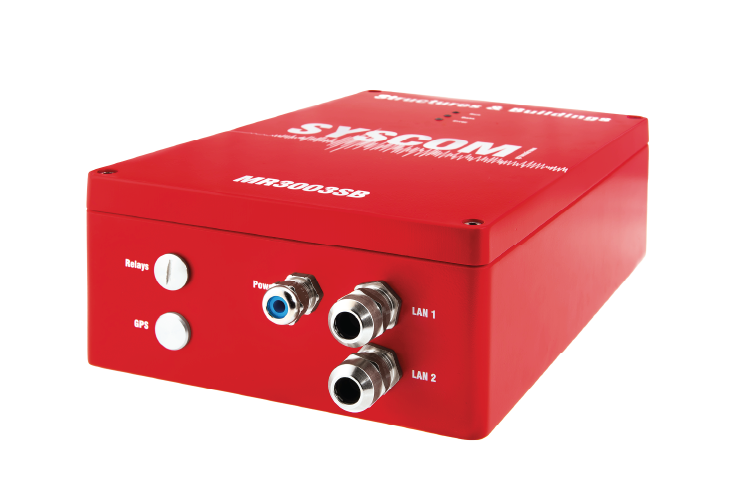
Syscom Instruments
Working with Orica Digital Solutions' Geosolutions.
Working with Orica Digital Solutions' Geosolutions.
Each seismic monitoring system from Geosolutions combines high-grade sensors, robust data loggers, and easy-to-use analysis tools. Every component is designed for dependability under pressure.
With decades of experience from Syscom, our people know what reliable seismic data looks like in the field. The technology is proven, yes, but what sets it apart is the support behind it. Our engineers work directly with site teams to check calibrations, review results, and fine-tune systems as conditions shift.
Every mine, refinery, or offshore facility has its own rhythm. We help you read it. That’s how each seismic monitoring system keeps doing its job, accurate, relevant, and trusted long after the first installation.
From data to confidence
At its core, earthquake seismic monitoring is about turning movement into understanding. Geosolutions helps operators see the full picture, how strong the motion was, where it came from, and what it means for the structure. When things stabilise, the data confirms it. When movement starts again, the system reports it immediately.
We don’t leave once the systems online. As your site develops or conditions shift, we keep refining the setup, checking data flow, and making sure every reading still tells the truth. That continued involvement gives operators real confidence, in their systems, their decisions, and the safety of the people who depend on them.
If your operation needs dependable, field-proven seismic monitoring equipment, connect with Geosolutions. We’ll help design a setup that fits your environment, whether that’s a power plant, offshore platform, or city structure, and keeps you informed when the ground moves.
Seismic monitoring FAQs
What is seismic monitoring?
It’s the continuous measurement of vibration and ground movement caused by natural or man-made seismic activity to protect structures and operations.
How do seismic monitoring systems work?
Sensors detect ground motion and vibration in real time. The data is processed through seismic monitoring software to identify changes and trigger alerts when limits are exceeded.
Why is seismic monitoring important?
It helps engineers understand how structures respond to seismic events, ensuring safety, reducing downtime, and maintaining operational integrity.
What is meant by seismic activity?
Seismic activity refers to the vibration or movement of the Earth’s crust caused by natural events like earthquakes or by human activities such as blasting or drilling. It describes how energy travels through the ground and how that movement affects nearby structures or operations.
Case study
Seismic monitoring—Taguig Philippines.
The Philippines are one of the most seismic countries in the world, with 5
earthquakes with magnitude equal or greater than 7.4 on the Richter scale since 2001. Since there are many highly urbanized regions, the high-rise buildings are one of the most sensitive structures to be monitored.
Contact Orica about copper
Contact Orica about copper
Connect with our team to discuss copper-specific challenges, from orebody variability to fragmentation, productivity, and downstream performance.